Fashion
What Size Winter Coat Should I Get? How to Size a Coat to Fit Over Sweaters
Should you size up for a winter coat? How to measure for a coat you'll wear over sweaters, how it should fit, how puffers, wool, leather and faux fur differ, and when going up a size makes sense.
Published November 15, 2026
A winter coat in Canada does a different job from a fall jacket. It goes over a chunky knit in January, gets zipped up at a bus stop, and has to let you reach for a seatbelt without the back seam pulling. So the question most people type in this time of year is a fair one: what size winter coat should I get, and do I need to size up to fit a sweater underneath? Here's how to work it out before you order, whether the coat is a puffer, a wool overcoat, a leather coat or faux fur.
Should you size up for a winter coat?
Usually not by default. Most winter coats are already cut with room for a layer underneath, because the brand expects you to wear one. If you add a full size on top of that, the shoulders slide past your own, the sleeves cover your hands and the hem hangs lower than the designer intended.

The better move is to start from your usual size and read two things on the product page: the size chart and the fit note. Words like "relaxed", "oversized" or "roomy fit" mean the extra room is built in, so your regular size (or even one down) is often the one to choose. Words like "slim", "tailored" or "fitted" mean there's less room, and that's where sizing up for a thick sweater can make sense.
Know your measurements before you shop: sign up free and get your size from 2 photos with Shaku, then compare them with each coat's own chart.
The measurements that decide your coat size
Four numbers do most of the work for outerwear. Chest (or bust) is the main one, measured around the fullest part with your arms relaxed. Shoulder width tells you whether the coat's shoulder seam will sit where yours ends. Sleeve length, from the shoulder point to the wrist bone, decides whether your wrists stay covered when you reach forward. For a long coat, add your hip measurement too, since a coat that fits at the chest can still pull across the hips when it's buttoned.
If you measure with a tape, do the chest over the kind of sweater you plan to wear under the coat, not over a T-shirt. That one change explains a lot of "it fit in the fall but not in January" returns.
No tape? Lay a coat you already like flat, zipped or buttoned, and measure straight across the chest from armpit to armpit. Double that number and you have the coat's chest measurement, which you can compare with the garment measurements on a new coat's chart.
How a winter coat should fit over a sweater
Try the coat on over your thickest everyday knit, then run through a few quick checks in front of a mirror.
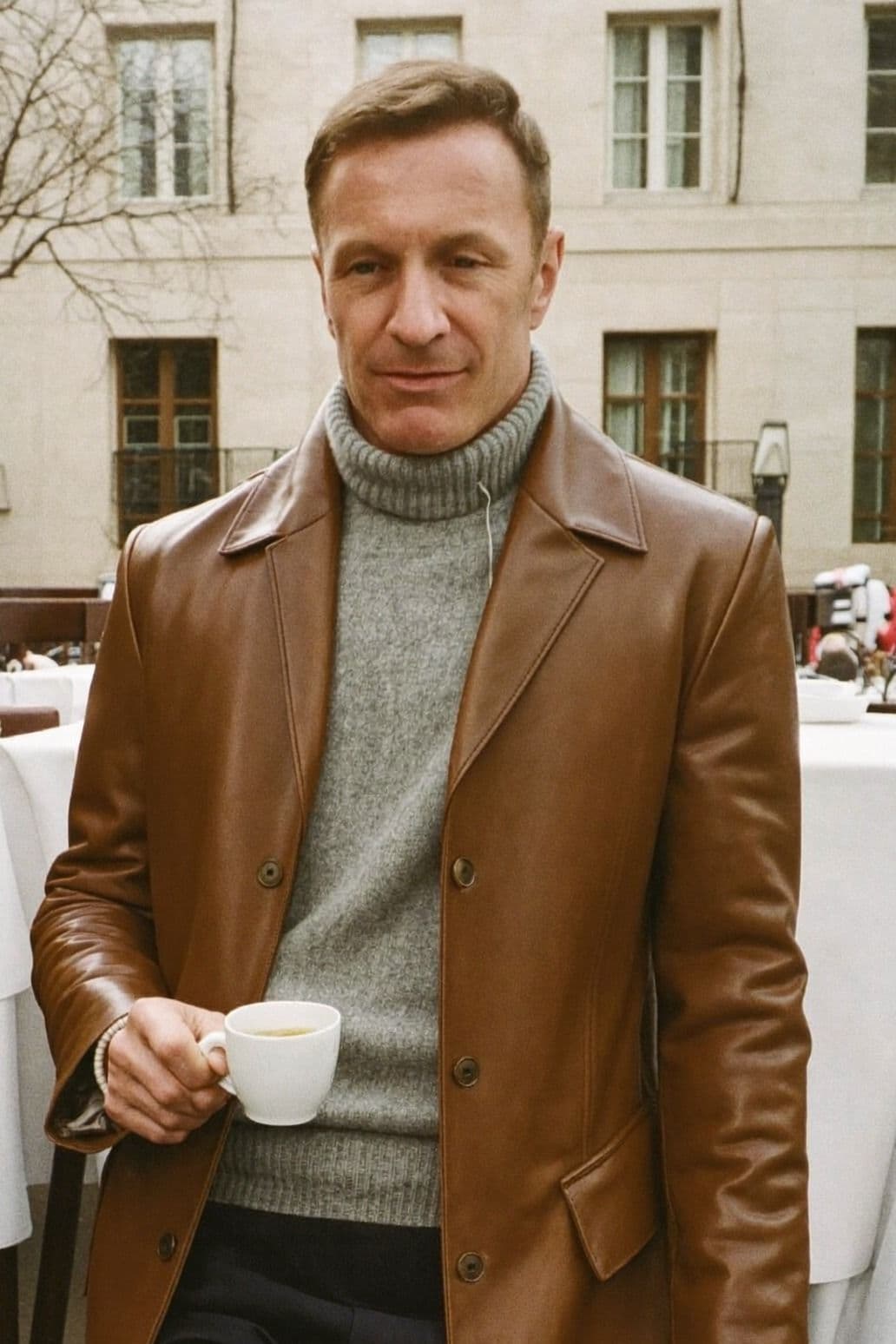
The shoulder seam should sit at the edge of your shoulder, or just past it on a dropped-shoulder style. If it sits inside your shoulder, the coat is too small no matter how well it closes.
Button or zip it all the way. Look for X-shaped creases pulling from the buttons across the chest; they mean the coat is tight. You should be able to slide a flat hand between the sweater and the coat at the chest.
Reach both arms forward as if you're holding a steering wheel. The sleeves should still cover your wrist bone, and the back shouldn't feel like it's pulling across your shoulder blades.
Sit down. A long coat should open at the vent or the bottom buttons without straining across your hips or thighs.
Coat styles that fit differently
Puffers: the insulation takes up room on the inside as well as the outside, so a puffer can feel snugger than its chart suggests. Check the chest measurement on the chart against yours plus your sweater, and look at the sleeve length, since puffy sleeves ride up when you bend your arms.
Wool overcoats: these are often cut to go over a fine knit or a blazer, not a bulky cable-knit. If you live in chunky sweaters, a wool coat is the style where moving up a size, or choosing a relaxed cut, makes the most sense.
Leather and faux-leather coats: leather has very little give, so a tight leather coat stays tight. Get the shoulders right first; the body can be tailored, but the shoulders can't easily be changed. A faux-shearling lining also takes up room inside, so treat a lined leather coat like a slightly smaller size.
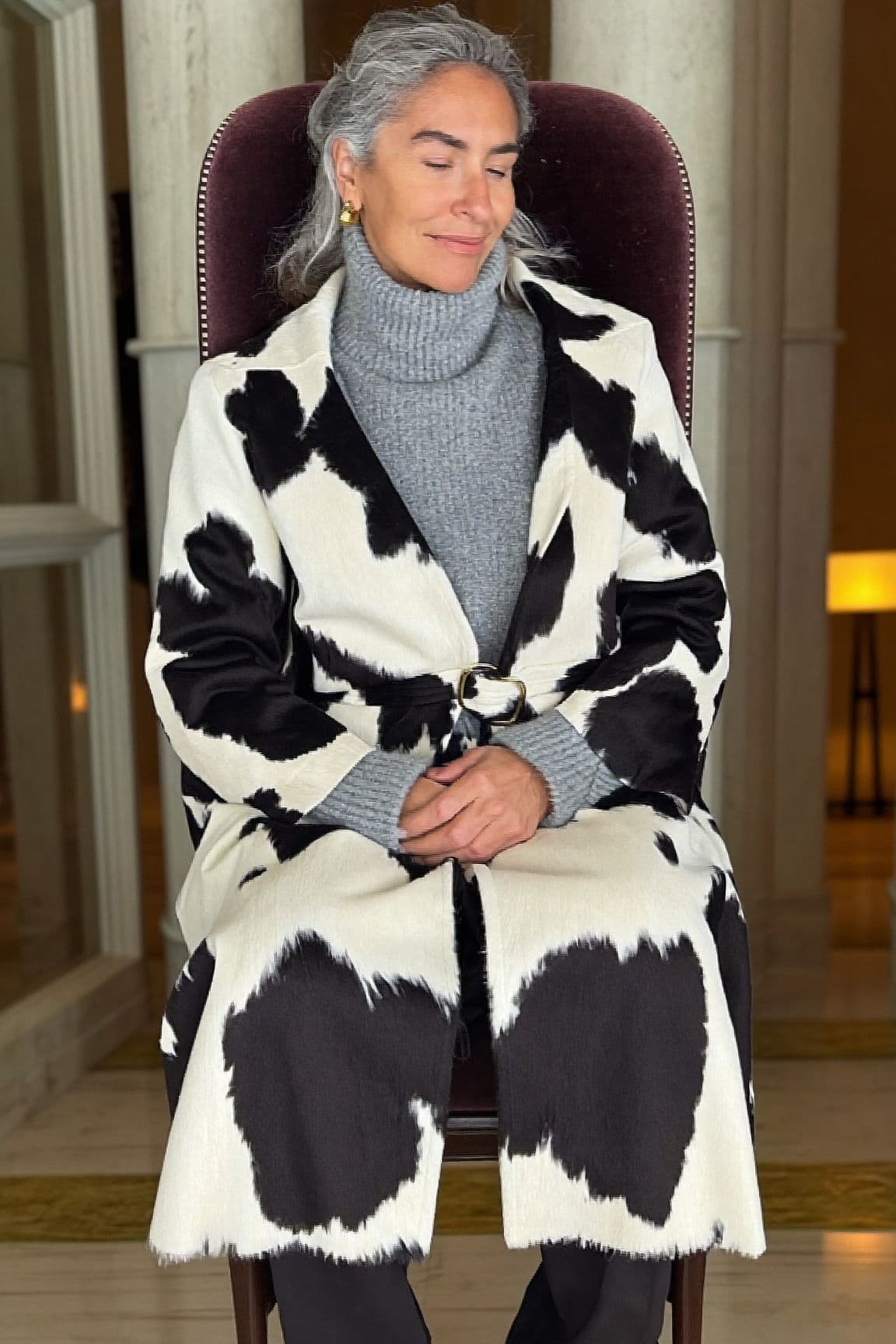
Faux-fur and teddy coats: they're usually cut generously and meant to look a little oversized. Your regular size tends to work, and sizing up can make the coat look like it's wearing you.

Parkas: most are designed to layer, with longer sleeves and a roomier body. Stick with your usual size unless the fit note says slim.
Size chart: body measurements or garment measurements?
Coat size charts come in two kinds, and mixing them up is one of the most common reasons a coat arrives the wrong size. A body-measurement chart tells you which size fits a person with a certain chest and waist. A garment-measurement chart tells you how big the coat itself is when laid flat, extra room included.
If the chart says something like "to fit chest" or "body measurements", compare it directly with your own numbers. If it says "garment", "product" or "flat" measurements, compare it with a coat you already own and like, measured the same way. The difference between your body and the garment is the room you'll have for a sweater.
When to size up, and when not to
Size up when you're between sizes and you'll wear thick knits most days, when the coat is described as slim or tailored, or when your shoulders are at the very top of a size's range. The shoulders are the one part you can't fix later.

Don't size up when only the sleeves are short; look for a tall or long-sleeve option instead, or check whether the brand lists sleeve length by size. Skip it too when the coat is already described as oversized or relaxed, or when the problem is the hips on a long coat, where an A-line or belted style may fit better in your usual size.
Before you order, check the return policy for that coat, including any holiday return window. Outerwear is bulky to send back, so getting the size right the first time saves a trip to the post office.
How Shaku helps you find a winter coat that fits over your sweaters
Everything above comes down to comparing the right numbers: your measurements against each coat's own chart. Shaku is built to do that comparison for you, in three steps.
1. Find the coat you want by text or photo
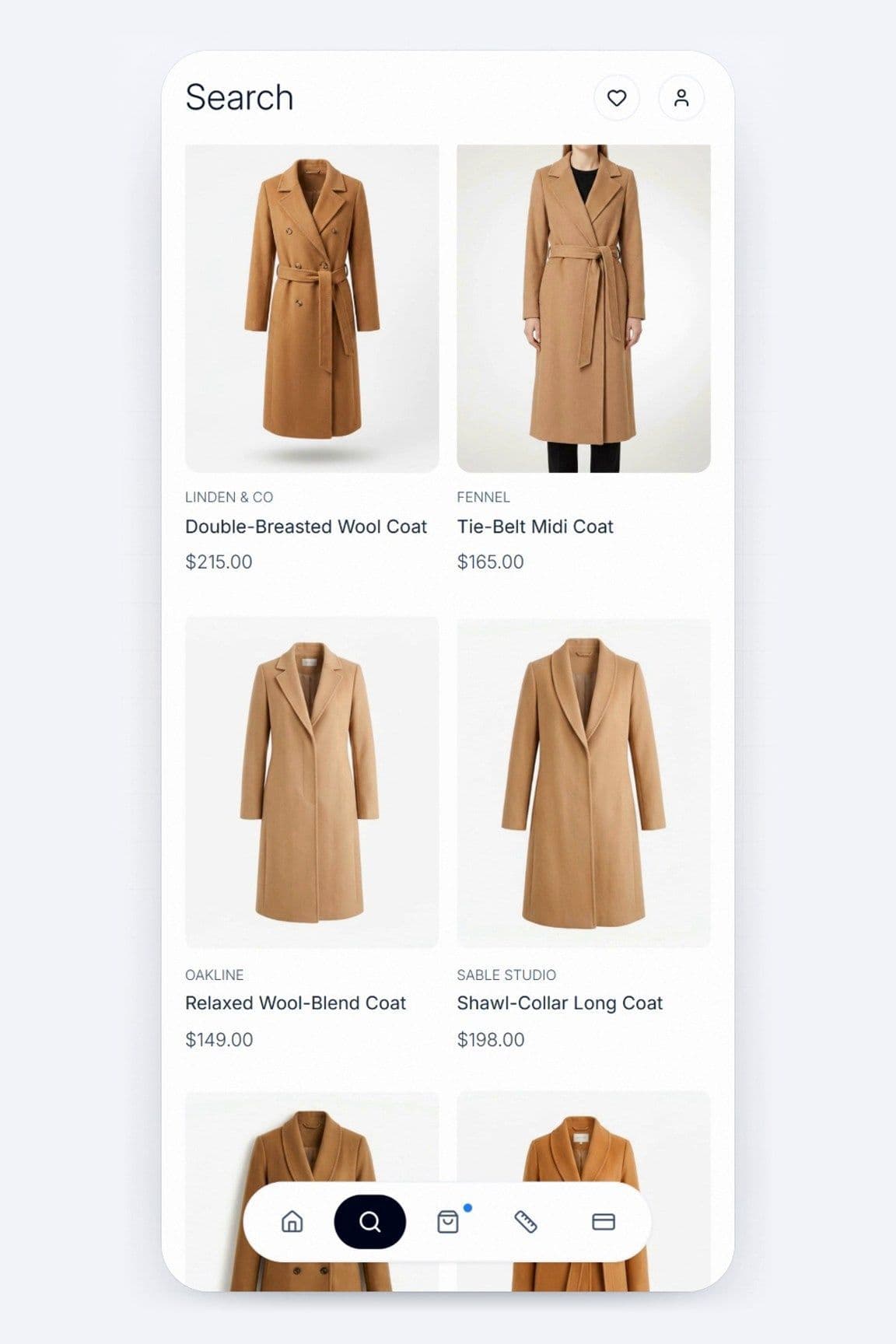
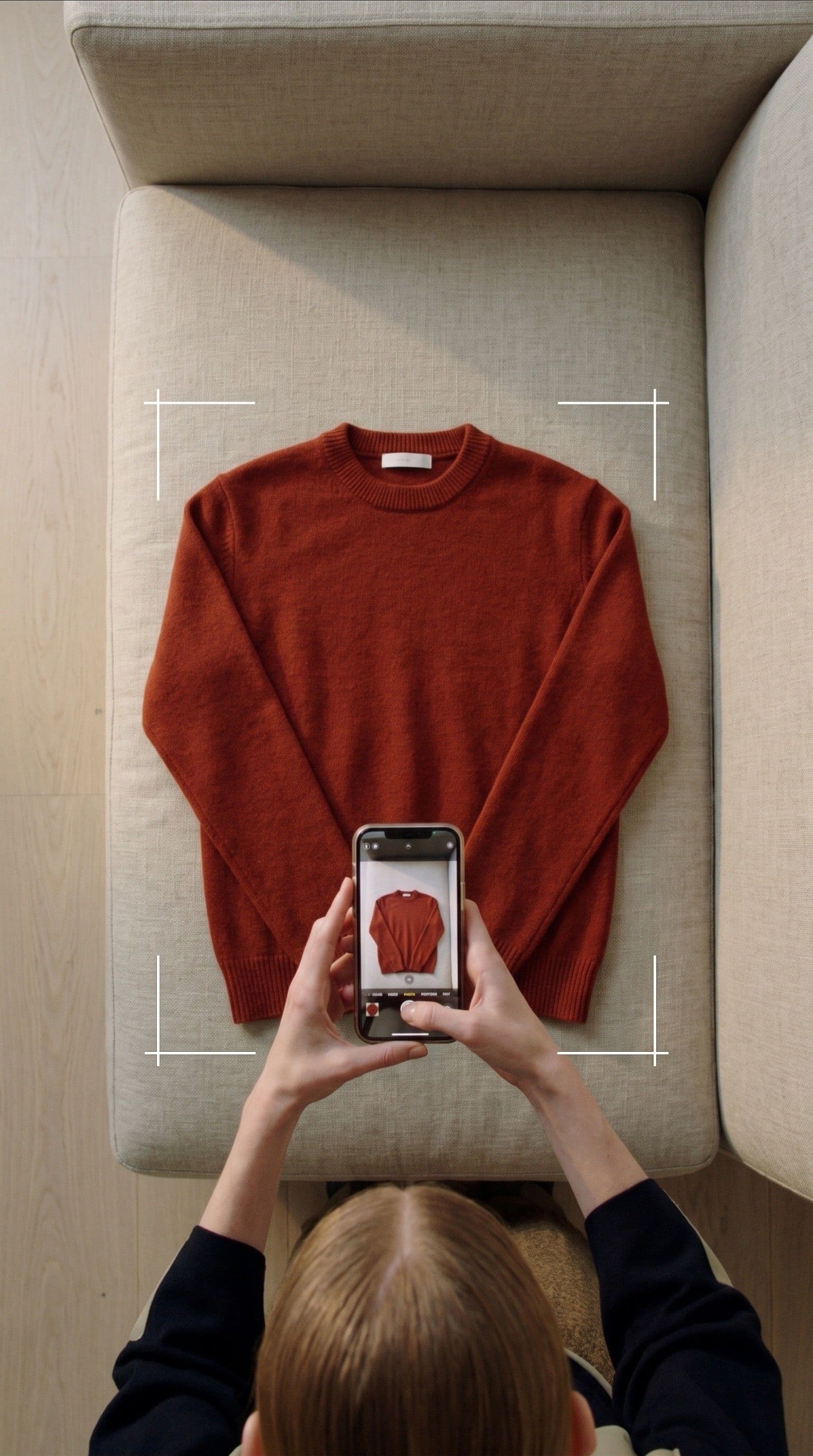
Search for a style in words, like "camel wool coat" or "black leather coat", or snap a photo of a coat you like. Shaku shows similar coats from different stores side by side, so you can compare cuts and fit notes before you settle on one.
2. Get your measurements from two photos
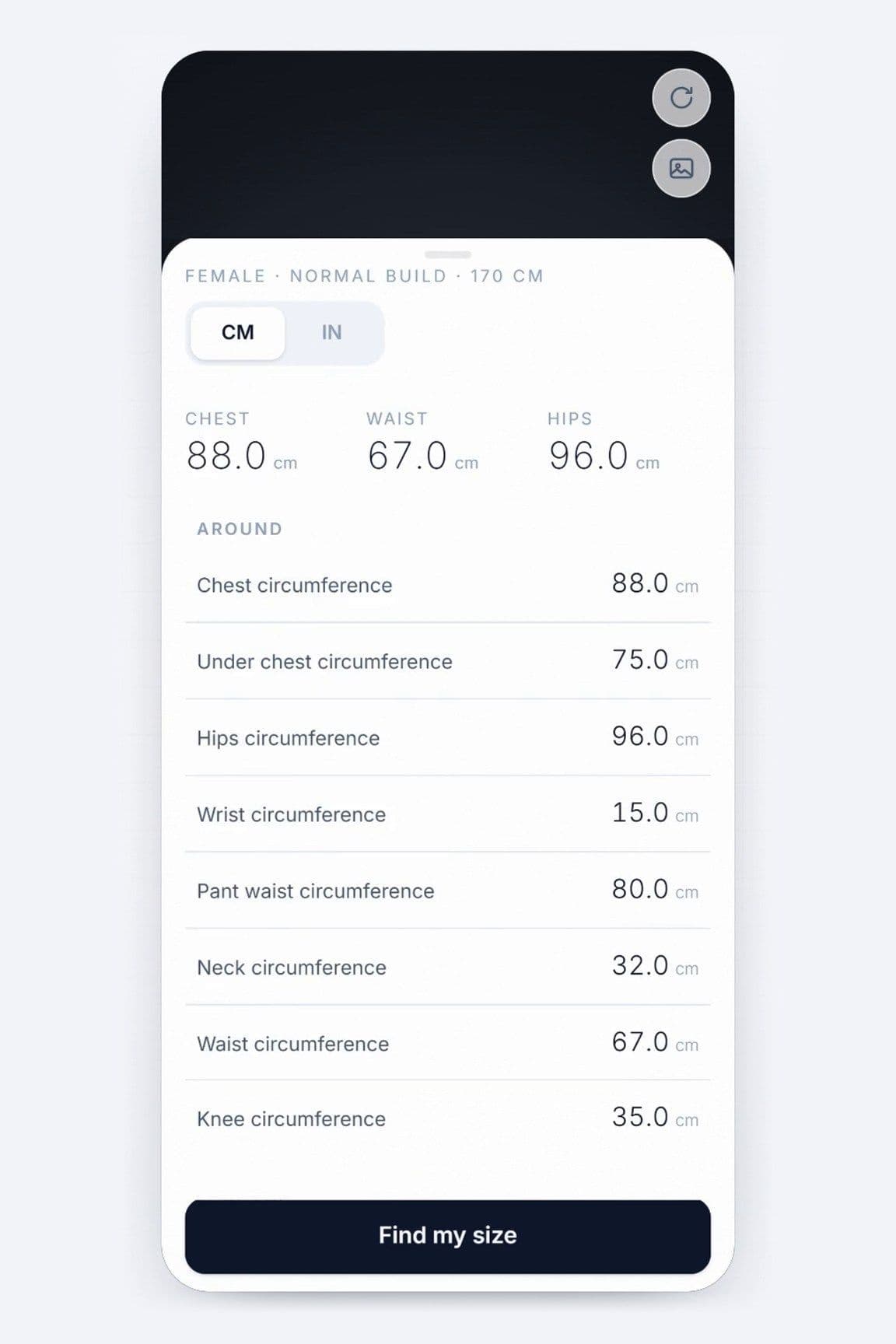
Take a front photo and a side photo with your phone, and Shaku works out your body measurements, including chest, waist and hips. You can keep them on your phone and use them for every coat you look at, with no tape measure.

3. See your best size on that coat's own chart
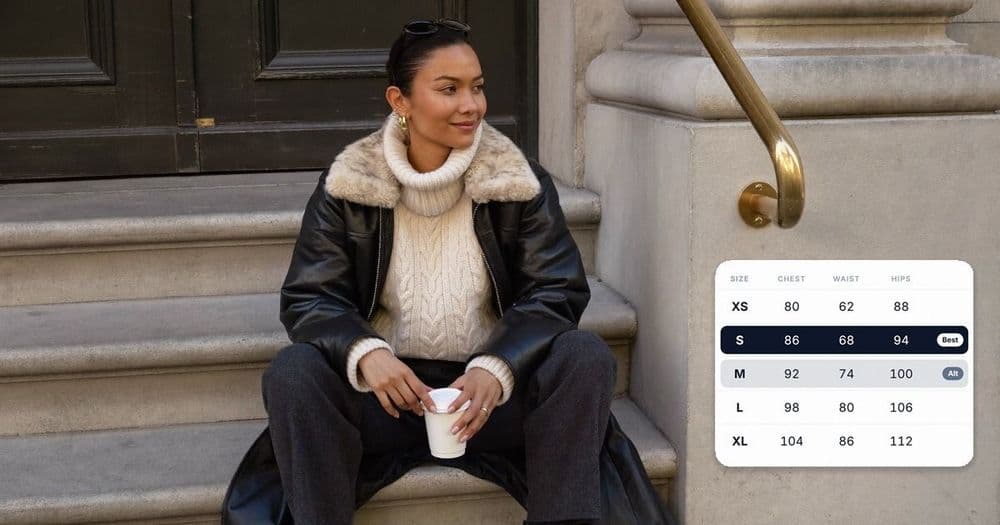
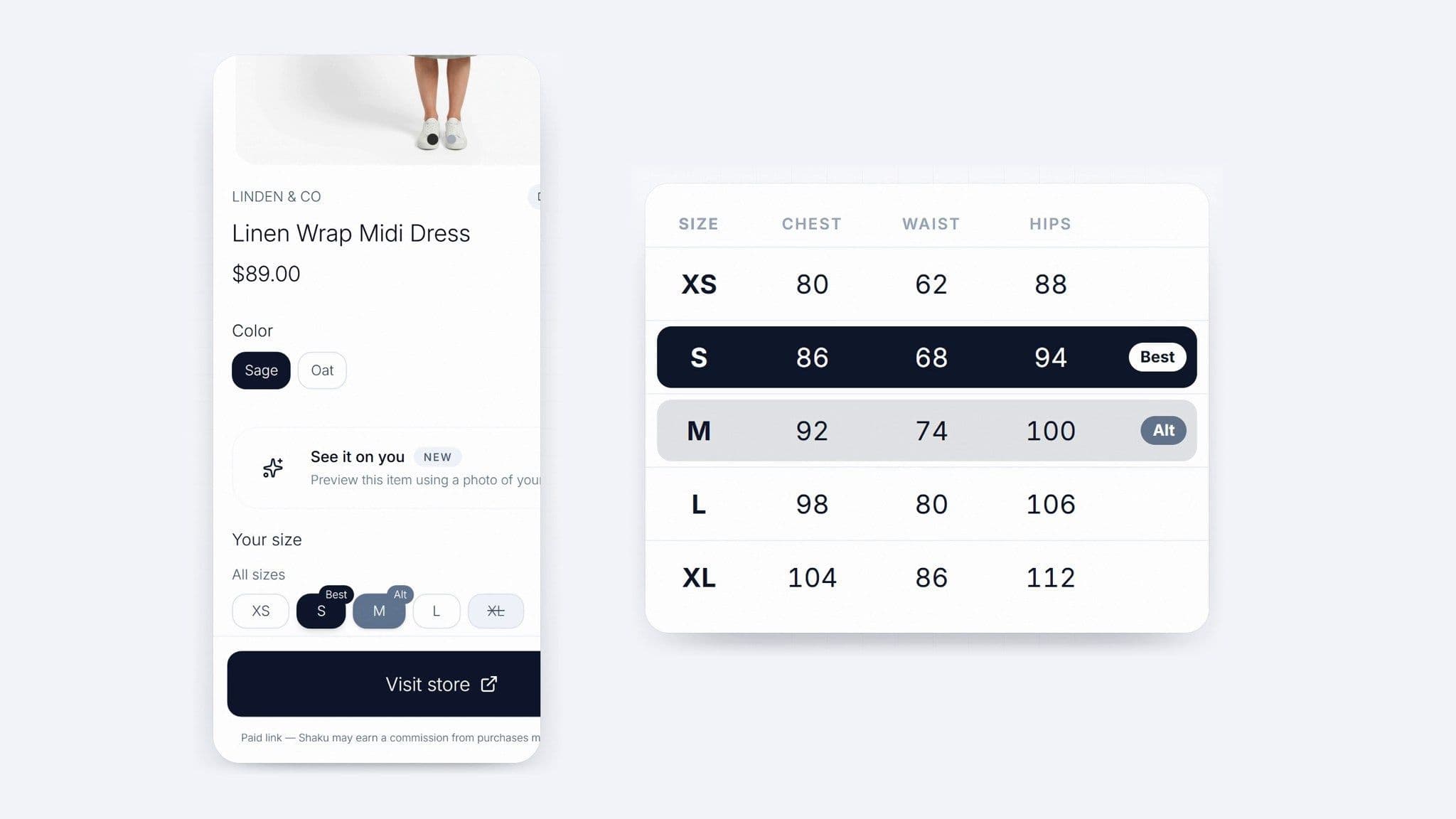
Shaku matches your measurements against the size chart for the exact coat you picked and shows your best size match plus an alternative. If you're between the two and plan to wear chunky knits, the fit tips above help you decide which way to go.

Find My Size — free for 7 days. Sign up free and get your size from 2 photos before your next coat order.
Frequently asked questions
Should I size up in a winter coat to wear a sweater underneath?
Not automatically. Most winter coats already include room for a layer. Check the fit note and the size chart: if the coat is relaxed or oversized, stay with your usual size; if it's slim or tailored and you wear thick knits, going up one size often makes sense.
How do I know if a winter coat is too small?
The shoulder seam sits inside your shoulder, the buttons pull into X-shaped creases across the chest, the sleeves ride above your wrist bone when you reach forward, or the back feels tight when you cross your arms. Any of these over a sweater means the coat is too small.