
Fashion
What to Wear If You Have an Hourglass Body Shape
Figuring out what to wear for an hourglass body shape? See waist-defining styles, oversized alternatives, and layering tips for dressing on your terms.
Published October 13, 2026
An hourglass shape means a bust and hips that sit close in width, with a waist that's noticeably narrower than both. That's really the whole story behind what to wear for an hourglass body shape: your waist already has more definition built in than a lot of other shapes have to work with, so clothes that follow the body's natural line tend to sit well without much adjustment. It's one of several common proportion patterns. See how it compares to others in our guide to the most common body types, or start from our complete body shape guide if you're not sure where you land.
The difference between your waist measurement and your bust or hip measurement usually runs larger than average for this shape, often somewhere around 8 to 10 inches or more, though every body is different and there's no exact cutoff to hit. Two directions work here: styles that show off that waist definition, and looser, boxier silhouettes that skip it entirely. Neither one is more correct than the other. What you reach for on a given day comes down to preference, not a rule you need to follow.
What to Wear for an Hourglass Body Shape: Waist-Defining Styles
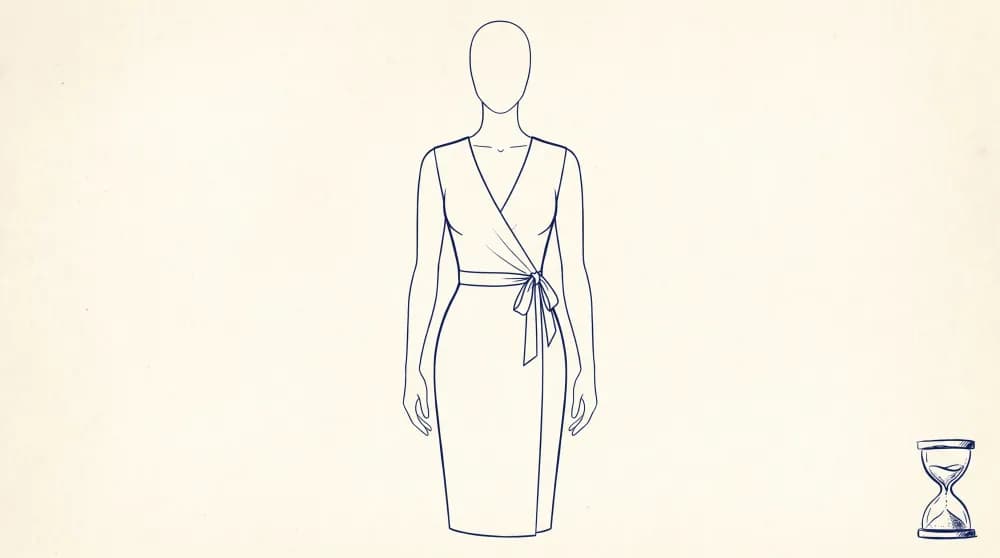
If you like how your waist looks and want clothing that follows that line, a handful of categories do it especially well. Wrap dresses are the classic match, since the whole design is built around a waist tie that lets you control exactly how fitted it feels. Faux-wrap dresses give you the same visual line without the styling effort, and belted shirt dresses or fit-and-flare cuts work on the same principle: fitted through the midsection, then releasing into the skirt. For jumpsuits, look for a defined waist seam or a self-tie belt rather than a straight-through cut, which tends to skip over the waist altogether.
Tops follow similar logic. Fitted knits, ribbed sweaters, and wrap tops naturally trace the body's line without needing any structure underneath, and a button-down tucked in (or a T-shirt with a slight taper) does something similar for more casual outfits. None of this calls for tight clothing; "fitted" just means the fabric follows your shape instead of hanging straight down from the shoulders. The same idea carries into bottoms: high-waisted trousers, jeans, and skirts sit at the narrowest part of the torso, exactly where this shape has the most to work with, and pairing them with a tucked-in top makes the waistline read clearly in the silhouette. Wide-leg and straight-leg cuts both work fine too, since waist placement matters more than leg shape. For a blazer, look for one nipped in at the waist through darts, a seam, or a self-belt; single-breasted styles with a slight curve at the side seam add structure to an outfit while still following your natural line.
Denim and Jeans
Jeans are worth their own section, since they're where fit questions come up most often. A high-rise cut that sits at or near the natural waist tends to follow an hourglass shape's line most closely, and it's a big part of why high-rise denim has stayed popular for as long as it has. Look for jeans described as having a curvier fit, which usually means more room built into the hip and thigh relative to the waist, since a jean cut for a straighter body can pull at the hip or gap at the waistband on this shape even in the "correct" size.
Straight-leg and slightly flared jeans both work well if you want the leg opening to balance a fuller hip, while a skinny or slim style will simply follow the leg's natural taper more closely. Wide-leg and barrel-leg cuts, both trending heavily this year, still work fine on an hourglass shape as long as the waistband itself sits properly; the volume happening below the knee doesn't change how the waist and hip fit above it.
Layering and Outerwear Without Losing Shape
Outerwear is where waist definition tends to disappear from an outfit, mostly because coats are often boxier by design. A structured coat with a waist seam or belt keeps that shape intact, and trench coats are the easiest example since the belt is already part of the design (wrap coats work the same way). If you already own a boxier coat, belting it at the waist, even with a thin belt worn over the coat rather than through loops, brings the waistline back without buying anything new. A fitted cardigan or knit worn under an open coat does something similar, keeping the waist visible even when the outer layer is loose. None of this is mandatory, though — an open, unbelted coat over anything is a perfectly reasonable choice too; it's just a different look.
Oversized and Boxy Silhouettes Are Just as Valid
Worth saying plainly: an hourglass shape doesn't obligate anyone to show off their waist. Boxy blazers, straight-cut dresses, oversized button-downs, and wide drop-shoulder sweaters all work fine on this body type if that's the look you're after. Personal style always overrides shape-based suggestions, and the ideas in this post are starting points for people who want them, not requirements. If you find yourself gravitating toward looser, more relaxed clothing, that's a style preference, not something to correct.
2026's Relaxed Tailoring Trend
If you want a specific direction to experiment with, 2026 has leaned hard into relaxed, oversized tailoring and dropped-waist silhouettes: think roomy trousers, longer and looser blazers, dresses or tops where the waist seam sits below your actual waist. It's a genuinely popular alternative for anyone on this body type who wants to play with proportion rather than define the waist in every outfit. A dropped-waist dress or a long, unstructured blazer over wide trousers reads as current and put-together without touching the fitted-waist approach at all. Plenty of people mix both directions in the same wardrobe, fitted some days and relaxed on others, and that's a completely normal way to wear either trend.
Swimwear
Swimwear tends to follow the same two directions as everything else on this list. A one-piece with a defined waist, whether through ruching, a belt detail, or a cut-out at the side, echoes the wrap-dress logic covered above and tends to sit well simply because it follows a line your body already has. A high-waisted bikini bottom paired with a top that has some structure, like an underwire or a wider band, does something similar in two pieces instead of one.
A looser, boxier one-piece or a swim dress works just as well if that's more your speed on a given day. As with clothing, swimwear comes down to what feels comfortable and confident to wear, not a shape-based requirement.
Know Your Actual Measurements Before You Shop
One thing trips people up no matter which direction they pick: bust, waist, and hip measurements vary more than you'd expect between brands, even within the same labeled size. A size 8 wrap dress from one brand and a size 8 from another can fit noticeably differently at the waist. That matters if you're choosing a style specifically for its waist definition, and it matters just as much if you're sizing up on purpose for an oversized look and want to know how much room you're actually getting.
Knowing your own numbers beats guessing from a size chart. Shaku's two-photo scan builds a real body model from photos you take on your phone and gives you a size match in seconds, no tape measure needed. That holds for a fitted wrap dress and an oversized blazer alike: you're matching your actual measurements to what a brand means by its size labels, not hoping for the best.
Accessories
A belt is the single most useful accessory for this shape, precisely because it's the fastest way to introduce or reinforce a waistline on days you want one. A wide belt makes a bolder statement over a dress or a boxy coat, while a thin belt adds a more subtle line to a casual outfit. Beyond belts, most accessory choices come down to plain preference rather than shape logic: statement earrings, layered necklaces, and structured bags all work fine regardless of proportion, since they sit above or beside the waist rather than interacting with it directly.
Activewear and Loungewear
The same waist-definition question carries over into activewear, just with stretchier fabric to work with. High-waisted leggings and shorts that sit at the natural waist tend to stay in place better during movement than a low-rise pair, simply because they're anchored at your narrowest point, and a fitted or ribbed sports bra paired with a slightly cropped top keeps that same line visible if you want it. A looser tank or oversized tee over the same leggings works just as well for a more relaxed look, and neither choice is more "correct" for this shape than the other.
Loungewear follows the same logic on a smaller scale. A wrap-style robe or a drawstring-waist set gives you the option to cinch in at the waist or leave it loose, depending on what you're in the mood for that day. As with everything else in this guide, comfort is the only real requirement.
Frequently asked questions
What dresses are best for an hourglass body shape?
Wrap dresses, faux-wrap styles, belted shirt dresses, and fit-and-flare cuts all follow the waist's natural line, which is why they come up so often for this shape. Straight-cut and dropped-waist dresses work too; they just create a different, more relaxed silhouette.
Do I have to wear fitted clothing if I have an hourglass shape?
No. Oversized and boxy silhouettes are just as valid a choice for this body shape as for any other. What you wear comes down to your own preference, not a rule about your proportions.
What jeans fit an hourglass shape best?
A high-rise, curvier-fit style, meaning one with more built-in room through the hip and thigh relative to the waist, tends to sit more comfortably than a straighter cut in the same labeled size. Straight, flared, wide, and skinny leg styles all work fine once the waist and hip fit properly.
How do I find my actual size instead of guessing from a chart?
Brand size charts vary, and the same size label can fit differently at the bust, waist, or hips from one retailer to the next. Taking your own measurements, or using a tool like Shaku's photo-based body scan, gives you a size match based on your actual body rather than an average.