
Fashion
What to Wear If You Have a Pear-Shaped Body
Not sure what to wear for a pear shaped body? Get guidance on tops, bottoms, and dresses that create balance and confidence—plus why style rules are optional.
Published October 13, 2026
A surprising number of styling questions we hear start the same way: "I have wider hips and I never know what actually works." If you've typed some version of what to wear pear shaped body into a search bar at eleven at night before an event, you're in good company, and you're not dealing with a problem to fix. Pear shape just describes a proportion pattern: hips and thighs that run a bit wider than the bust and shoulders, usually with a waist that narrows noticeably in between. It's one of the most common body shapes out there, and it shows up at every size.
If you're still figuring out whether this is even your shape, our rundown of the most common body types is a good place to start. And for the full picture across every shape, there's our complete guide to dressing for your body shape.
What a Pear Shape Actually Means
A pear (some call it a triangle) is shorthand for a specific ratio: hip and thigh measurements that run larger than the bust and shoulders, with a defined waist in between. Nothing unusual about it. It's shared by a huge share of women and shows up across every size range.
Here's the part that actually helps once you're shopping: knowing your real measurements, not just the size printed on a tag. Two brands' size 8 can land inches apart at the hip. That gap is exactly why your own numbers matter more than chasing a specific size.
Tops and Necklines That Add Balance Up Top
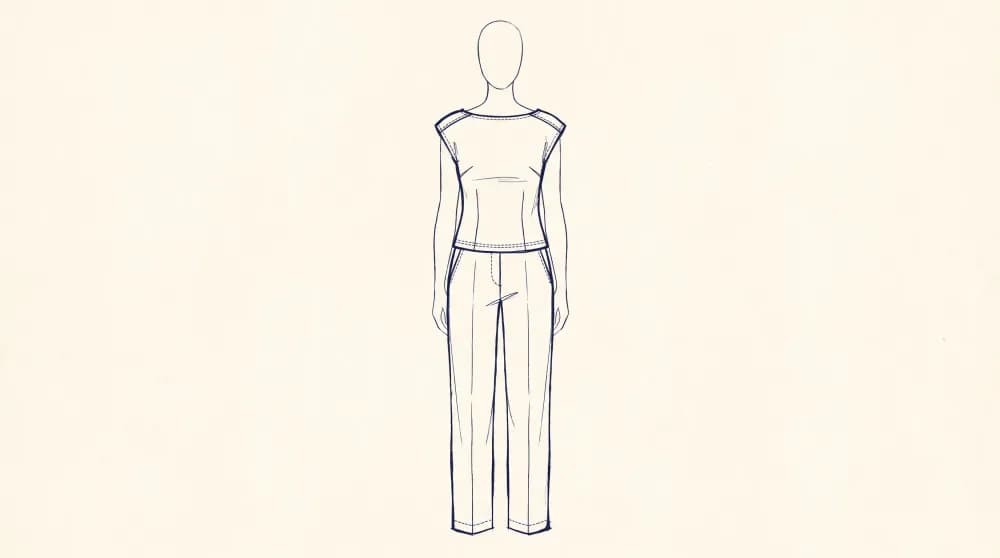
Since the idea is to bring some visual weight toward your shoulders, a few categories do most of the work here. Blazers and jackets with a defined shoulder seam, or actual structure like shoulder pads or a strong cap sleeve, add width at the top of the frame, no explanation needed beyond "it's a proportion choice." A boat neck or wide scoop neckline pulls the eye horizontally across the collarbone rather than down. And if you've noticed puff sleeves, bell sleeves, and balloon sleeves everywhere the last few seasons, that's not an accident: a statement sleeve on an otherwise plain top can carry the whole outfit.
Texture pulls its own weight too. Sequins, embroidery, a bold print, ruffles, a chunky knit, all of it draws attention upward and outward, so if you gravitate toward color and pattern, your top is a great place to lead with it. Off-the-shoulder necklines work in the same direction, widening the visual line across the shoulders and collarbone, and they pair naturally with something simpler on the bottom, like the wide-leg trousers or A-line skirts below.
Bottoms That Create a Balanced Line
None of what follows is about disappearing your lower half. It's really about creating a line that moves smoothly from top to bottom instead of stopping abruptly at the widest point. An A-line skirt handles this well, following the hip and then flaring gently outward so the silhouette keeps moving in one direction. Knee-length and midi versions work for both the office and the weekend. Straight-leg and bootcut trousers follow the same logic for pants, since the leg opening doesn't taper in sharply and the whole silhouette reads as more even from top to bottom.
Color plays a role too, though it's optional rather than required. Darker or solid-colored bottoms paired with a lighter, more detailed top tend to draw the eye upward first. Plenty of people wear light-wash denim or a loud print on the bottom and look great doing it. Wide-leg trousers and palazzo pants, meanwhile, have had a real moment lately for reasons beyond comfort: the volume through the leg balances out fuller hips, and the overall effect elongates the frame. Pair them with something fitted or tucked up top so the outfit doesn't read as oversized head to toe.
Denim, Specifically
Jeans deserve a closer look, since they're where fit tends to matter most day to day. A mid-rise or high-rise jean that sits at or near the natural waist follows a pear shape's line most naturally, and many brands now offer a specific "curvy" fit built with extra room through the hip and thigh relative to the waist, worth checking for if a straight-fit style in your usual size keeps gaping at the waistband. Bootcut and wide-leg jeans balance a fuller hip with proportional volume at the ankle, following the same logic as the palazzo pants and wide-leg trousers covered above, and both have been trending heavily alongside this year's broader move toward wider-leg denim.
A skinny or straight-leg jean works fine too, especially paired with a top that adds some width up top to keep the overall silhouette balanced. As with everything in this guide, the "right" cut is whichever one you reach for and feel good wearing, not a mandate based on hip measurement alone.
Dresses That Work With a Pear Shape
Fit-and-flare is probably the easiest one to reach for. Fitted through the bodice and waist, then flaring out from there, it follows your natural waistline and keeps that line moving outward smoothly, which is part of why it shows up in so many pear-shaped wardrobes. A wrap dress does something different, cinching at the waist by design so it highlights that narrower point while the skirt falls loosely over the hips; the neckline, usually a V or surplice cut, opens things up a bit at the top. Then there's the empire waist, which skips the natural waistline altogether, letting fabric sit just below the bust and flow straight down for a clean vertical line. None of these outranks the others. They're just different tools for different days.
Outerwear and Layering
Coats and jackets are worth their own mention, since a boxy or oversized shape up top does a lot to balance out a fuller hip and thigh below it. A structured jacket that hits at or just above the hip, rather than one that stops right at the widest point, tends to create the smoothest line, and a cropped jacket paired with a longer top underneath works on the same principle in reverse, adding a horizontal break higher up on the body.
A single-breasted coat with some shoulder structure adds the same visual width up top that a blazer does, and it's an easy way to carry the "balance" idea through the colder months without rethinking your whole outerwear collection. A belted trench or wrap coat is worth trying too, since cinching at the natural waist (rather than letting a coat hang straight past the hip) keeps the waist as the visual narrowest point rather than letting the coat's own hem create a wider line lower down. As always, an open, unbelted coat is a perfectly good choice on days that's the look you want instead.
What to Wear for a Pear-Shaped Body: There Are No Rules Here
Everything above is a set of tools, not a checklist you need to finish. Plenty of people with pear-shaped bodies wear bodycon dresses, skinny jeans, crop tops, high-waisted bikinis, whatever they're drawn to, and none of it is wrong. Body-shape guides exist mainly to make online shopping less confusing, since sizing swings so much from brand to brand, but your comfort and your own taste come first. If you love how something looks and feels on you, that settles it.
Accessories That Add Balance Up Top
Accessories are a low-effort way to bring some of the same upward focus that structured tops and statement sleeves create. Statement earrings, a chunky necklace, or a patterned scarf tied at the neck all draw the eye toward the face and shoulders, which pairs naturally with the boat-neck and puff-sleeve tops covered above. A structured, boxy handbag echoes the same visual weight a shoulder-detail blazer adds, if you're going for a fully coordinated look, while a smaller crossbody or clutch works just as well if that's simply the bag you prefer carrying.
Belts are worth a mention too, mostly because they're such an easy way to reinforce the waistline a pear shape already has. A belt worn over a dress, a coat, or even a loose top marks that narrow point clearly, and it works with nearly every silhouette already covered in this guide. As with everything else here, it's an option to reach for on days you want it, not a required finishing touch.
Shopping With Confidence, Not Guesswork
A lot of online shopping frustration has nothing to do with body shape at all. It's not knowing your actual measurements when every brand sizes differently. Once you know your real hip, waist, and bust numbers instead of just the size label from your last order, shopping across brands gets a lot easier, say an A-line skirt from one retailer, or a wrap dress from another.
That's the gap Shaku fills. Its two-photo scan gives you your measurements plus a size match in seconds, no tape measure required. Instead of guessing between a medium and a large, you get numbers you can actually use, brand after brand.
Frequently asked questions
What jeans work best for a pear shape?
Straight-leg, bootcut, and wide-leg jeans tend to create a balanced line from hip to hem, especially in a darker or solid wash. Skinny jeans and every other fit are completely fine too. Jean fit really comes down to what you like wearing.
Should pear shapes avoid horizontal stripes on the bottom?
Not really. Horizontal stripes get described sometimes as adding visual width, so some people choose to place them on top instead. There's no hard rule here though, and stripes look good wherever you want to wear them.
What swimsuits work well for a pear shape?
A top with some detail, ruffles, a bold print, a halter tie, or a bandeau with straps, paired with a simpler bottom is one common approach. High-waisted bottoms are popular too, both for coverage and for defining the waist. Think of it as a starting point, not a requirement.
What coats work well for a pear shape?
A structured coat or jacket with some shoulder detail, hitting at or above the hip rather than right at the widest point, tends to create the smoothest line. A belted trench or wrap coat is another common option, since cinching at the waist keeps that as the visual narrow point.
How do I find my actual measurements instead of guessing my size?
A soft tape measure at the bust, waist, and hip gets the job done, or you can skip the manual work with something like Shaku, which uses a two-photo scan to calculate your measurements and match them to sizes across different brands in seconds.